End hunger, achieve food security and improved nutrition and promote sustainable agriculture

Research
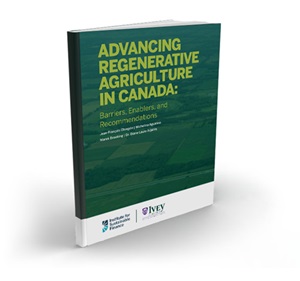
Advancing Regenerative Agriculture in Canada
Envision a future where Canadian farms thrive while restoring ecosystems and combating climate change. Dr Diane-Laure Arjaliès and the Ivey Sustainable Finance Lab team at Western University present a compelling report on regenerative agriculture, highlighting sustainable practices that enhance biodiversity and mitigate environmental impacts. Discover innovative financial strategies and collaborative efforts crucial for this green transition, with actionable insights for policy-makers, farmers, and stakeholders.
Plant Stress & Food Insecurity
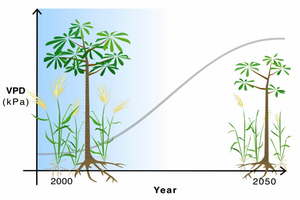
Researchers in Western’s Department of Biology are addressing global food security challenges by studying how plants respond to environmental and biological stress. Their work spans molecular, biochemical, and physiological research on plant tolerance to climate-related factors such as drought and heat, as well as plant-pest and plant-microbe interactions. By exploring biosynthetic pathways and resilience mechanisms, this research contributes to the development of hardier crops and more sustainable food systems in the face of climate change.
Teaching
Nutrition Education
The undergraduate Foods and Nutrition program at Western University delves into nutrition’s critical role in society, encompassing food science, health determinants, and cultural influences. The program features specialized modules such as Nutrition and Dietetics and covers topics like Nutrition Care, Community Nutrition, and Sustainable Food Systems. This comprehensive educational approach equips students to contribute positively to societal health, addressing issues like disease prevention and community well-being through informed dietary and nutritional practices.
Regenerator: An Impact-Driven Program
The 16-week accelerator program is dedicated to agri-food start-ups committed to sustainability and systemic change. In partnership with the Morrissette Institute for Entrepreneurship and the Centre for Building Sustainable Value, it offers hands-on mentorship and educational training focused on decarbonization, biodiversity conservation, and bio-circularity. Designed to embed best practices into actionable strategies, the program empowers entrepreneurs to accelerate their ventures and contribute significantly to the global sustainability goals. The Regenerator program will deliver live modules on key sustainability topics and fund 8 agri-food ventures for a 4-month intensive program.
FRESH at Western
FRESH (Food Resources and Education for Student Health) is a nutrition education program developed by graduate students enrolled in the Master of Science in Food and Nutrition program. It aims to enhance nutritional awareness and skills among university students, focusing on improving the campus food environment and providing experiential learning opportunities. Through this initiative, graduate students lead efforts to educate their peers about nutrition and healthy eating practices.
Nutrition Management
Western’s Nutrition Management program combines academic and hands-on training in clinical nutrition, food preparation, and foodservice operations. Students gain practical skills in menu planning, business development, and food safety, preparing them for leadership roles in diverse institutional and commercial food settings.
Outreach
Sustainability, Food and AI Conference
Western hosted a conference exploring how artificial intelligence (AI) can challenge and support global food sustainability in the face of climate change. The event focused on emerging innovations such as agrivoltaic systems that combine solar energy with food production, AI-powered tools for monitoring soil and crop health, and waste heat recovery from data centers to support greenhouse agriculture. By integrating technology and sustainable practices, the conference highlighted opportunities to build more resilient and efficient agri-food systems.
MealCare
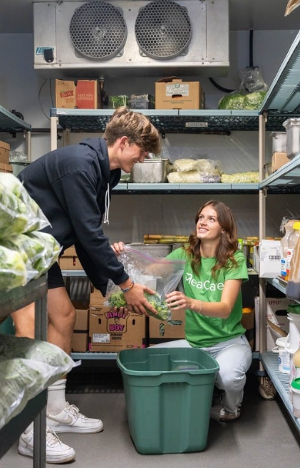
Western partners with MealCare to recover surplus edible food and redirect it to those in need in the London community. Through this initiative, over 8,900 meals have been diverted from waste and delivered to local food aid organizations. The program supports both sustainability and food security, with staff and community members benefiting from the redistributed meals.
Free and Open-Source Hardware
Western’s Free Appropriate Sustainability Technology (FAST) Research Group advances sustainable agriculture by developing open-source, solar-powered 3D printers and recycling technologies. By enabling decentralized production of farming tools through accessible designs and AI integration, FAST supports cost-effective, efficient, and locally adaptable solutions for Canadian farmers.
Operations

Hospitality Services
Western Hospitality Services is dedicated to fostering a healthy and sustainable food system on campus. They focus on aligning and assessing current initiatives with the UN SDGs. Additionally, they partner with organizations like MealCare, Food Support Services, and Ark Aid Mission to enhance food recovery processes, ensuring more efficient use and distribution of resources within the campus community.Local Meal Programs and Food Banks
To support students and community members facing food insecurity, Western has compiled a list of local food banks and community meal programs across London. This resource connects individuals with accessible food support options beyond campus.
Food Support Services
Food Support Services, managed by the University Students’ Council, is committed to alleviating food insecurity among students, staff, and the wider community. This service raises awareness on food insecurity, hunger, and poverty, both locally and globally. It offers an anonymous food hamper program where students can complete a request form to receive a grocery bag. A walk-in food bank is accessible during business hours.
Value Picks
Western’s Hospitality Services launched the Value Picks program to provide nutritious and affordable meal options priced under $10. Using a three-colour labelling system to indicate nutritional value, the initiative helps students make informed food choices without compromising on taste or quality. Value Picks are available at various campus dining locations, clearly marked on menu boards and grab-and-go items.